App Development
Adb reverse tcp: Reach localhost APIs from your Android emulator or device
When your Kotlin, Flutter, React Native, or hybrid app must talk to a backend running only on Windows, adb reverse tcp is the bridge that keeps traffic on loopback where it belongs.

If you build Android apps in Java, Kotlin, Flutter, React Native, or anything that shares the same debugger, you eventually hit the same wall: the API you just booted on your PC is invisible to the process inside the emulator or USB-attached phone. You do not need a cloud tunnel for every smoke test—ADB can publish your host loopback to the device with one forward.
When that same API later moves onto a small Ubuntu box, I still keep apt plus UFW lines in the Nginx install snippet beside Flutter work so firewall muscle memory matches what I run on servers. If you are juggling SDK versions before you even reach networking, managing multiple Flutter SDKs with FVM documents the desktop side of that story.
When localhost on the emulator needs your PC backend
You already have the API bound to localhost on Windows. The Android process, however, lives in its own network namespace, so “localhost” there is not your PC until you tell ADB how to stitch the ports together. adb reverse does exactly that for TCP services you control on the host.
The adb reverse command and what each port means
The general shape is:
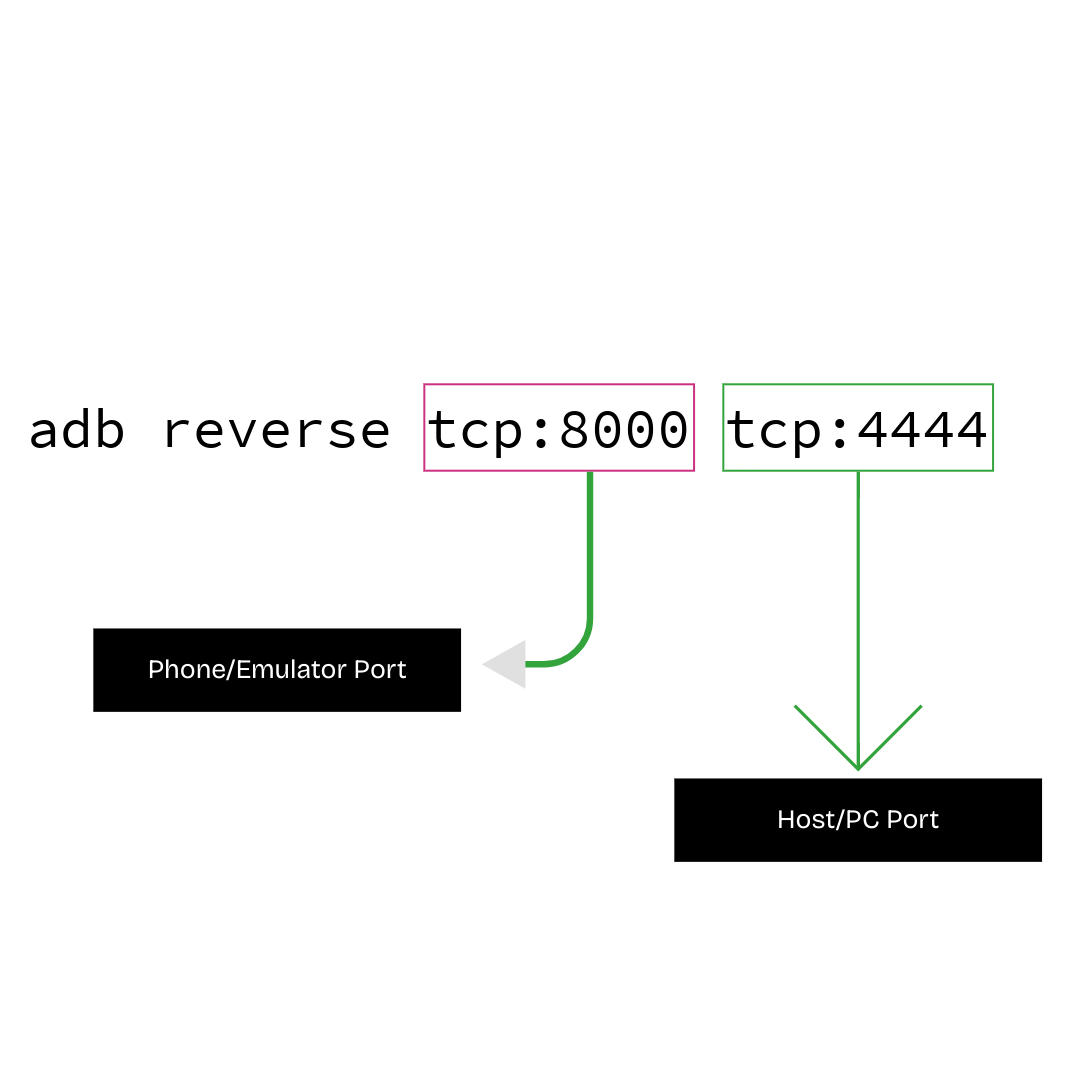
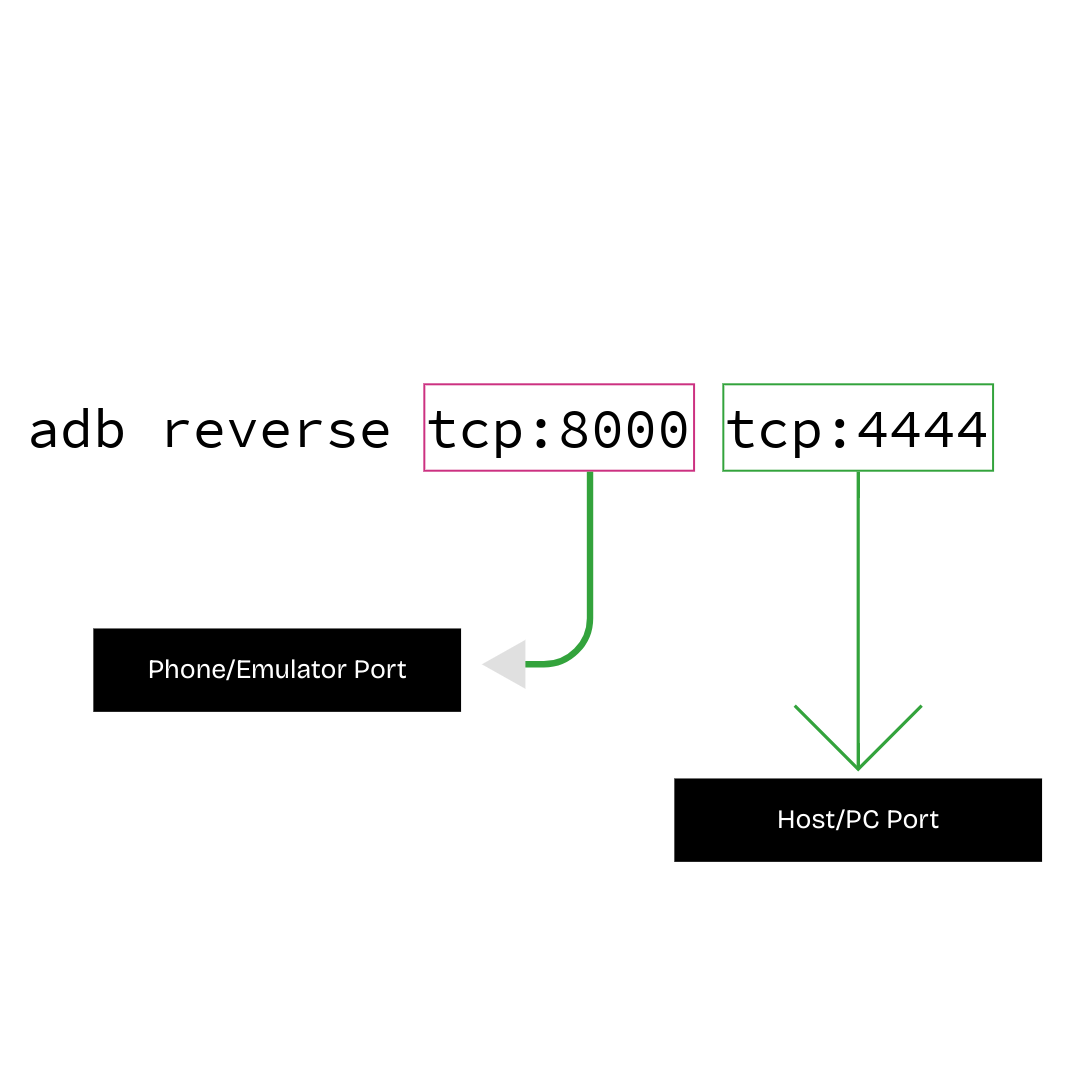
adb reverse <local> <remote>
Read it like this:
<local>— the TCP endpoint on the device or emulator (what your Android code should open).<remote>— the TCP endpoint on the host PC (where your backend already listens).
Notice how the device side comes first: you are teaching ADB which guest port should drain into your workstation.
Example adb reverse tcp mapping
Here is the same idea with explicit tcp: ports:
adb reverse tcp:8000 tcp:4444
Traffic that hits 127.0.0.1:8000 inside Android is forwarded to 127.0.0.1:4444 on your development machine, so a Spring Boot app on 4444 suddenly looks like it lives on 8000 from the app’s perspective.

That is the whole trick: run the command once per machine pairing, point your client at the device-local port you chose, and your existing backend keeps listening on the host without new bind addresses.
If the tunnel silently fails
Walk the boring checklist before you swap frameworks:
- Run
adb devicesand confirm the emulator or handset is authorized. - Curl or Postman the API from Windows on the host port you referenced in adb reverse.
- Peek at Windows Defender Firewall or corporate antivirus—some suites still meddle with loopback adapters.
- When you need the same apt/ufw cadence on the Linux side of a shared API, the Nginx-focused command slab is still the fastest copy/paste companion so you are not improvising rules under pressure.
Device connection checklist
- USB debugging is enabled on the device or emulator.
adb deviceslists your target before you forward ports.- PC firewalls can still block the process that owns the forwarded host port—allow it when tests fail mysteriously.
- Run
adb reverse --listafter scripts to confirm the tunnel you think exists actually does.
Frequently asked questions
What does adb reverse map when I run tcp forwarding?
It creates a reverse TCP bridge: the port you specify on Android forwards into the matching port on your PC, so your mobile client keeps using familiar loopback addresses while the real service stays on the host.
Do Android emulators still need adb reverse for localhost backends?
Usually the emulator can reach your workstation through 10.0.2.2, but adb reverse is still the right tool when you want identical behavior on emulators and USB hardware, when libraries assume 127.0.0.1 on-device, or when docs you are following already standardize on reverse tunnels.
How is adb reverse different from adb forward?
adb forward listens on the PC and pipes into the device; adb reverse listens on the device and pipes out to the PC. Pick reverse when the Android app initiates calls into APIs that only exist on your development machine.
Will adb reverse tunnels stay up after adb restarts or when I unplug USB?
No. Every mapping is tied to the active adb session. Restart the server, cycle the emulator, or disconnect USB and you re-run adb reverse before the next debugging pass.
Why does my tunnel fail even though adb reverse prints success?
Start with adb devices, validate the backend from Windows directly, then inspect firewall or antivirus policies. If the service only binds to a specific interface, make sure it still accepts loopback traffic on the port you referenced in the command.
Written by Shashikant Dwivedi
Engineer, occasional writer, full-time noticer. Based in Prayagraj, India. New essays land roughly twice a month.
Keep reading
Adjacent essays.

App Development
How to Manage Multiple Flutter SDK Versions on One PC with FVM
Oct 10, 2025 · 4 min

AI
ChatGPT Advanced Account Security in 2026 — passkeys without losing access
May 1, 2026 · 12 min

DevOps
Install Redis on Ubuntu Server: Official APT Repo & Remote Access
Sep 1, 2025 · 5 min
The newsletter
New articles in your inbox.
Occasional articles on engineering, tooling, and software development practices. No marketing, no fluff — just the article, when it's ready.
Unsubscribe with one click. Your email never leaves the list.